
As an Amazon Associate, we earn a small commission from qualifying purchases — at no extra cost to you.
Learn how to infuse oil with powdered herbs for skincare, hair care, and culinary uses with this simple and effective guide.
Making your own herbal oil at home is easier than you might think. All you need is a little bit of patience and a few simple ingredients like powdered herbs and a good oil. Don’t worry; we’ve explained everything below!
Can You Infuse Oil With Powdered Herbs?
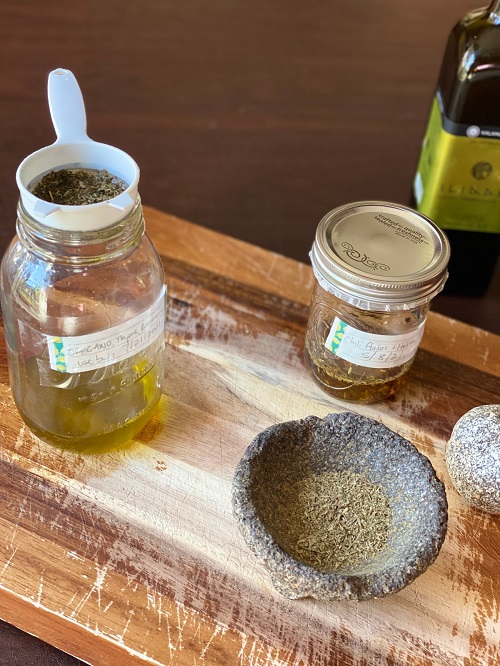
Before we get into the how part, it’s good to know if you can do it at home. And if you can, why even do it?
The short answer is yes. You can infuse oil with powdered herbs. In fact, it’s one of the easiest ways to add the benefits of herbs into your daily routine. The best part is that you don’t need fancy tools or hard-to-find ingredients, which makes it perfect for beginners.
But why? Well, people infuse oils for all sorts of reasons. Some do it for cooking, others for homemade skin care or massage oils. And powdered herbs are great because they mix easily with oil and release their goodness faster than whole herbs.
Just make sure to use clean, dry herbs and a good-quality oil, and you’re all set to start.
How to Infuse Oil With Powdered Herbs

Powdered herbs work well for infusions because they have a larger surface area, which helps them release their properties into the oil more quickly. This means you get a stronger, more concentrated final product in less time.
That’s why this method is often used to make skincare oils, hair treatments, and even flavored oils for cooking.
To infuse, you simply mix the powdered herb into a carrier oil like olive, jojoba, almond, or coconut oil. Then, let it sit to allow the herbs to blend into the oil. Simple, right? Let’s see how you can do it in detail!
Techniques to Infuse Oil With Powdered Herbs
1. Warm Infusion Method
It is ideal for those who need a quick infusion without compromising too much on potency. By applying gentle heat, you can speed up the process while still preserving many of the beneficial compounds in the herbs.
Just mix your powdered herb and carrier oil in a heat-safe glass jar or double boiler and heat the mixture on the lowest setting for about 2–3 hours. Make sure the temperature stays between 120–140 F (49–60 C) to avoid burning the herbs.
Stir occasionally so the powder doesn’t clump and the infusion stays even. Once done, you can strain the oil through a fine cheesecloth or coffee filter into a sterilized jar.
Pro Tip: Use a kitchen thermometer to monitor the heat, as going beyond the recommended range can degrade the oil’s quality.
2. Slow Infusion Method
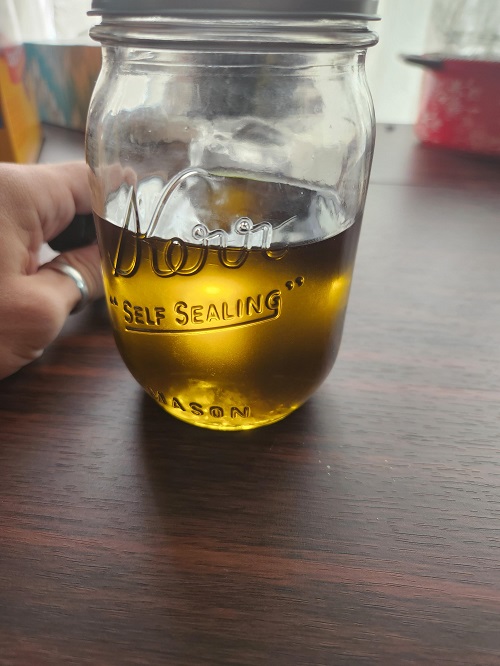
Also called traditional steeping, this is the best technique if you want maximum extraction without any heat, which preserves delicate compounds and nutrients. It takes patience, but the result is a deeply potent oil.
Simply fill a clean, dry glass jar halfway with powdered herb and pour in your chosen oil until it covers the herbs, leaving an inch of space at the top. Seal the jar tightly and keep it in a dark, room-temperature place for 3–4 weeks.
Shake it every couple of days to keep the powder suspended and ensure even infusion. After the waiting period, strain the oil using a fine cloth or filter and store it in a dark bottle.
3. Sunlight Infusion Technique
If you want a natural, energy-efficient option, try using the warmth of the sun. This method gives the oil a subtle, sun-kissed aroma and works well for culinary infusions.
Start by mixing the powdered herb and oil in a clear glass jar with a tight-fitting lid. Place the jar in a sunny windowsill or an area that receives indirect sunlight for 7–10 days. Once the infusion is complete, strain well and store in a cool, dark spot.
Pro Tip: Avoid direct harsh sunlight, as excessive heat can degrade sensitive oils.
4. Oven Infusion Method
When you need a controlled-heat method without waiting weeks, the oven technique is a convenient choice. It is handy for making herbal oils during colder months when sunlight is limited.
Preheat your oven to around 100–120 F (38–49 C). Place the herb and oil mixture in an oven-safe dish or mason jar and let it sit in the oven for 2–3 hours, but don’t forget to stir occasionally to keep everything blended. That’s it!
Once cooled, strain the oil and transfer it into a clean container.
5. Instant Blender Infusion
If you are short on time, this high-speed method uses friction to warm the oil while mixing slightly. This is the perfect method that allows a near-instant infusion.
Add the powdered herbs and oil to a high-speed blender and blend on medium-high for 2–3 minutes. Then, allow the oil to rest for a few hours so particles can settle before straining it thoroughly and storing it in a dark glass bottle.
Pro Tip: Chill the blender jar beforehand to prevent the oil from heating too quickly during the process.
6. Double Boiler Heat-Infusion
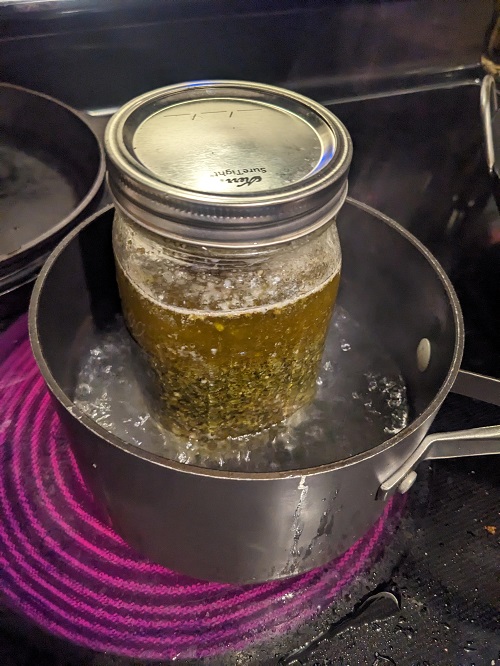
This technique is perfect for beauty and therapeutic oils because it uses gentle and consistent heat that mimics professional herbal oil-making.
Place a jar filled with your herb and oil mixture inside a pot of water to create a double boiler and keep the heat on low so the water simmers gently, and let the jar infuse for 2–4 hours.
Ensure the lid is loosely fitted to avoid condensation dripping into the oil. When ready, you can strain and bottle your oil for use in massage blends, skincare, or hair treatments.
Pro Tip: Add a layer of marbles or a canning rack at the bottom of the pot to keep the jar from direct contact with the heat source.
Well, now you know how to infuse oil with powdered herbs right at home. Choose one of the methods and let us know what worked best for you in the comments below!